The luthier
Alberto De Gattis
He has been building electric guitars and basses since 2011. De Gattis Guitars is his workshop: a small marque by choice, where every instrument passes through the same hands from the drawing to the delivery.
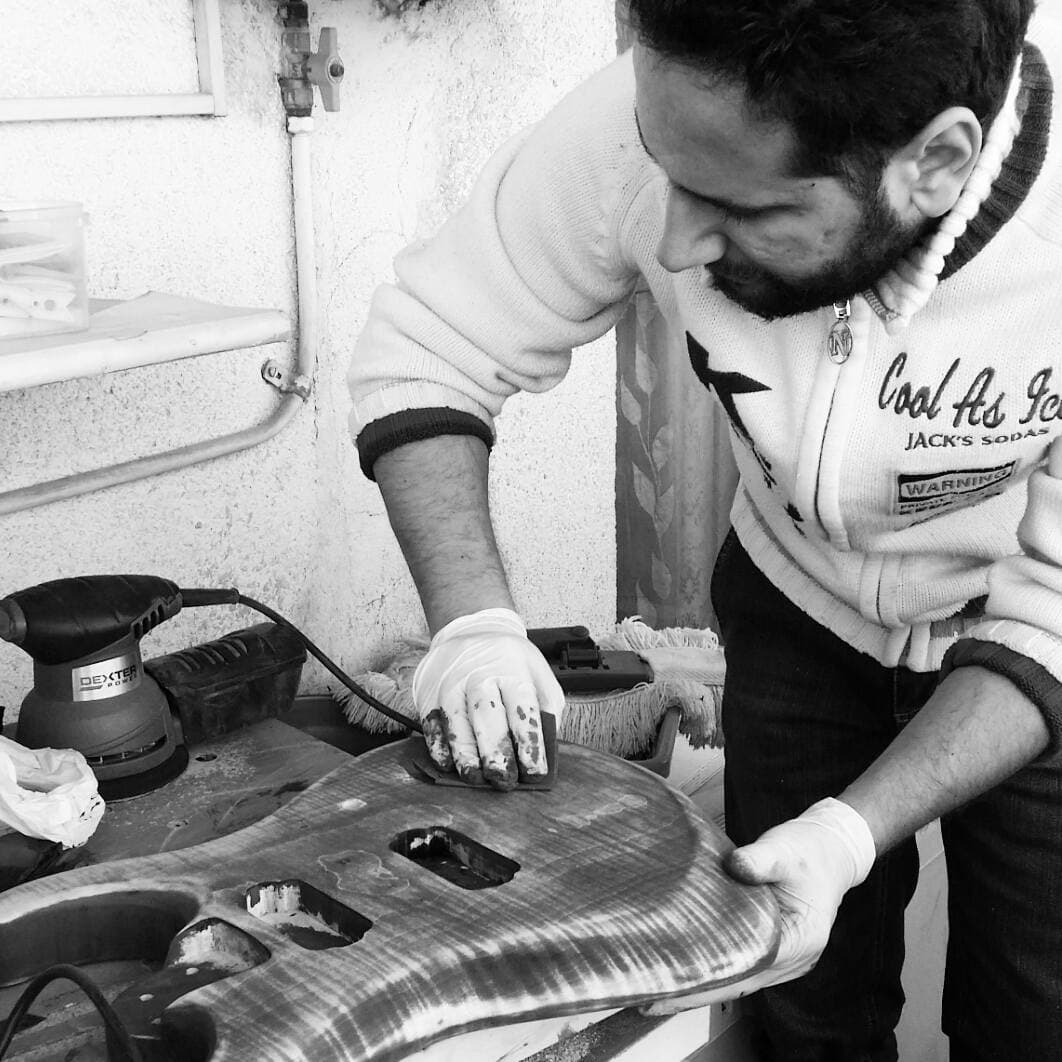

Where it comes from
Some stories begin with a man. Mine begins with a name.
De Gattis
Where it truly comes from, we will never know. Some traditions carry its roots beyond the Alps, as far as Brittany; other trails stop at Viterbo. Then the road turns south, into Calabria, as far as Martirano, where a branch of the family is said to have arrived in the fifteenth century.
Centuries went by. The name stayed.
Much later it reached my grandfather. He was a carpenter: he knew wood, its grain, its character. Then music came into his life and his road changed. The carpenter became an orchestra conductor.
I was born in Cosenza and I build in Rende, a few kilometres further on. I was born into music: a musician, then a composer, I spent years chasing sound, until I began to ask what came before it. Before the note. Before the vibration. The answer took me back to where my grandfather had started. To wood.
My grandfather: wood → music.Me: music → wood.Two generations. Two opposite directions. One destination.
That is how I became a luthier, and how De Gattis Guitars began. Not simply to build guitars, but to look for the point where matter meets sound.
Those years are worth more at the bench than anything else: I choose a board by hearing what it will do, not by counting how many I have chosen before. Every piece of wood is different, every grain happens once, every instrument is born a single time.
That is why a De Gattis is not only a guitar: it carries the memory of a family, the craft of Italian workshops and the search of a musician.
The journey may have started a long way from here. We may never know every stage of it. But we know where it goes on.
In my hands. In the wood. In the music. And in the hands of whoever chooses to carry it.The name is old. Music is endless. The guitar is how I bring the two together.
De Gattis Guitars — Handmade in Italy.
The luthier
Alberto De Gattis has studied art, music and economics, and holds a master's in sound engineering. That is why in this workshop wood and numbers are not two separate trades: the outline of a body, the thickness of a board and the way the instrument responds are one problem approached three times.
As well as building, he has worked as guitar tech for Steve Vai and for Federico Poggipollini, guitarist with Ligabue. Those are years spent behind the stage, on instruments that have to work that same evening: it is where you learn what moves, what breaks, and what a musician has no time to fix alone.
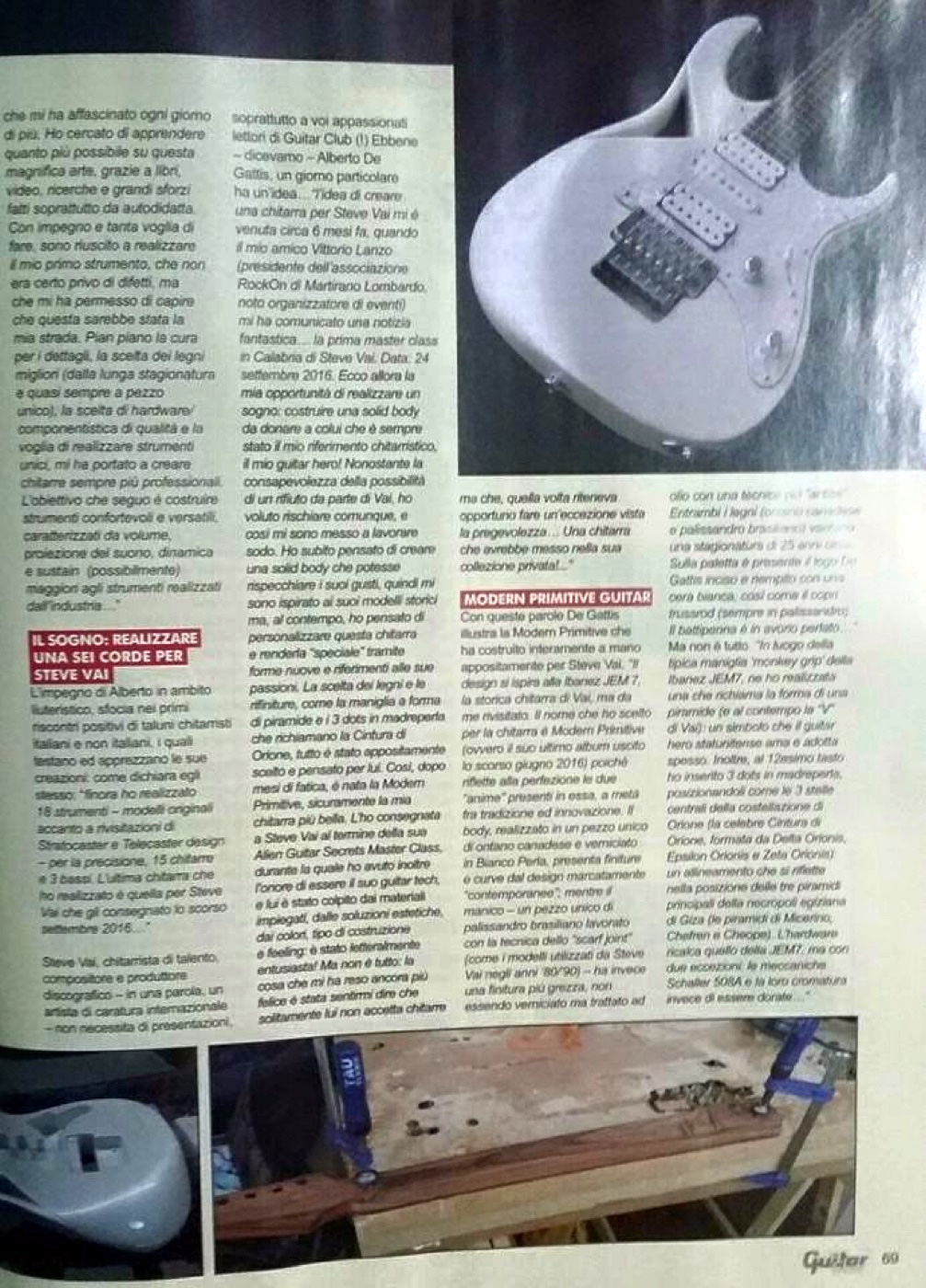
A De Gattis Modern Primitive is in Steve Vai’s collection, catalogued on his official site as SV 362. A second one was built for Russell Crowe and handed over at the Magna Grecia Film Festival in Catanzaro. Guitar Club has covered the workshop twice, in 2016 and in 2023. On the bench today, alongside the electrics, there are a violin and the first acoustics.
A De Gattis instrument is not simply built: it is conceived, designed and worked so that it has character, performance and a long life.
- 2011
- The year it started
- One person
- From the drawing to the delivery, with nothing handed over
- Registered designs
- The designs of the original models are registered and protected
The method
One instrument at a time, always in the same order.
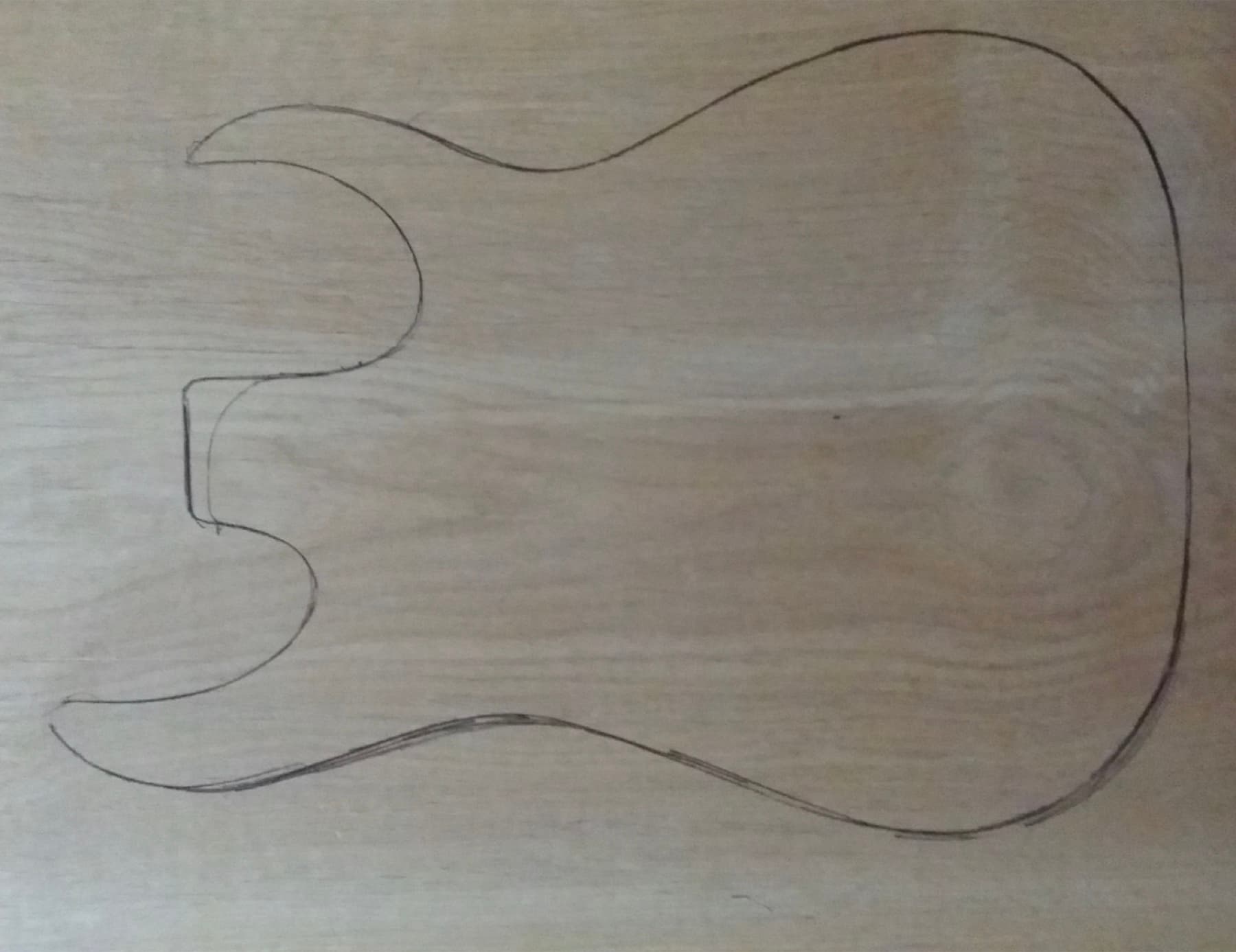
01
It starts on paper
Every model exists as a drawing before it exists as wood: outline, thicknesses, bridge placement, neck angle. It is the part nobody sees and it decides everything after it — a millimetre wrong here cannot be recovered further down.
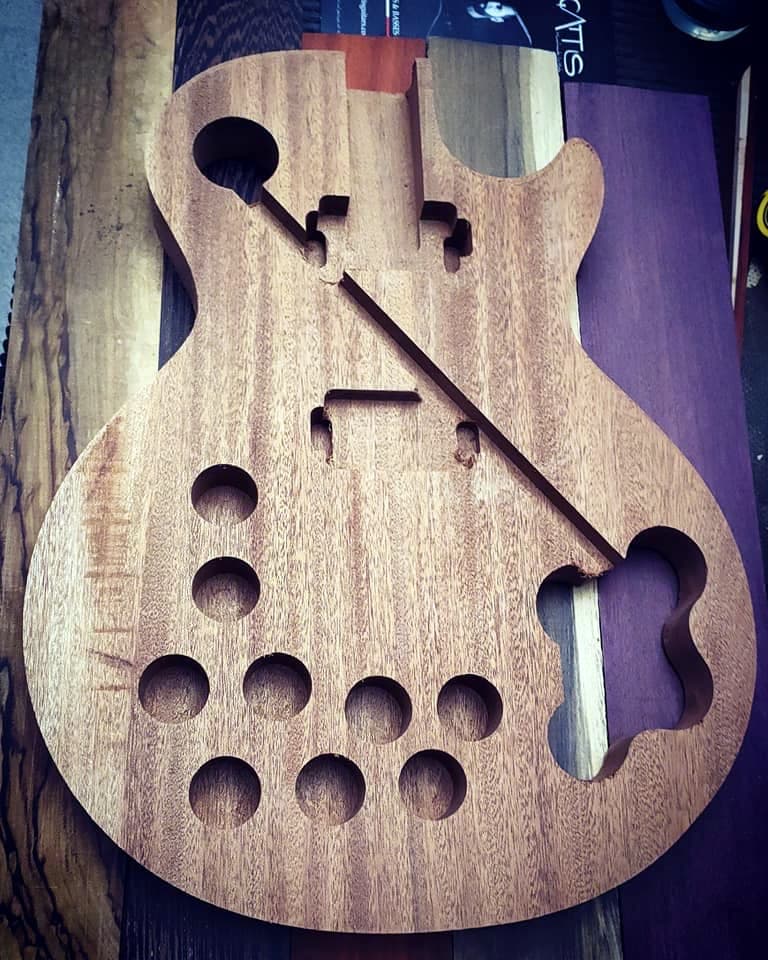
02
Then material comes out
Weight-relief chambers, the electronics cavity, the channels for the two carbon rods that run through the neck. The rods are standard on every model and are left out only on request: they add stiffness without adding weight, and that is what holds the neck still when the instrument changes climate.
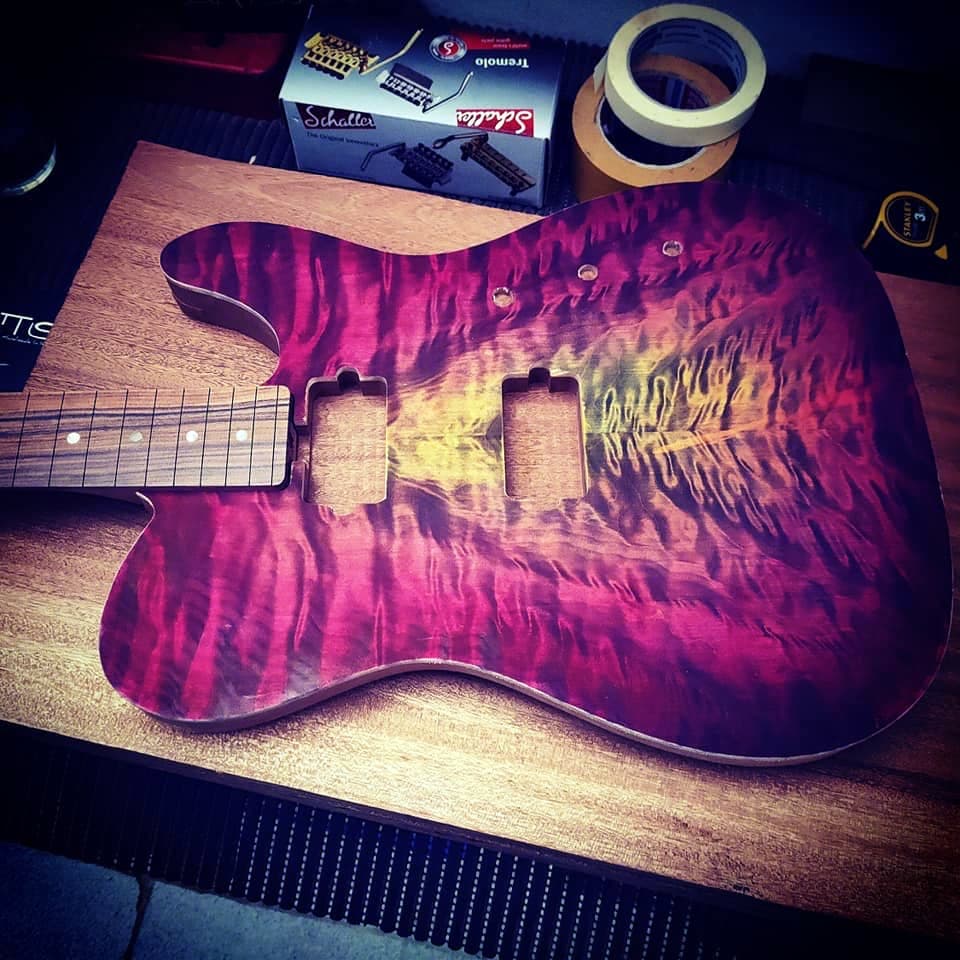
03
At the end there is a hand
The board gets chosen one at a time, because figured wood is never the same twice. From there on — sanding, finishing, assembly, final check — it is all done by hand, and that is the part that decides whether the instrument is finished or merely put together.
Press
What other people have written about it.
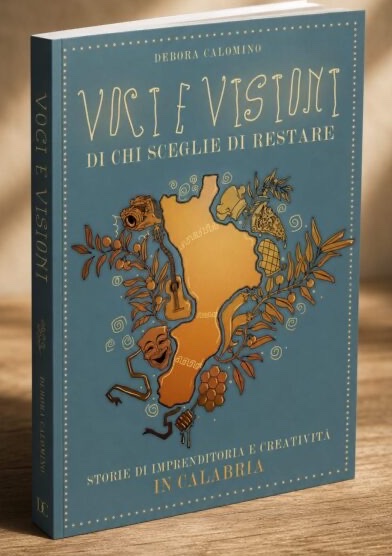
Voci e Visioni di chi sceglie di restare · Book by Debora Calomino · June 2026
One of the stories in it is Alberto De Gattis's: a craftsman's tradition carried into instrument making
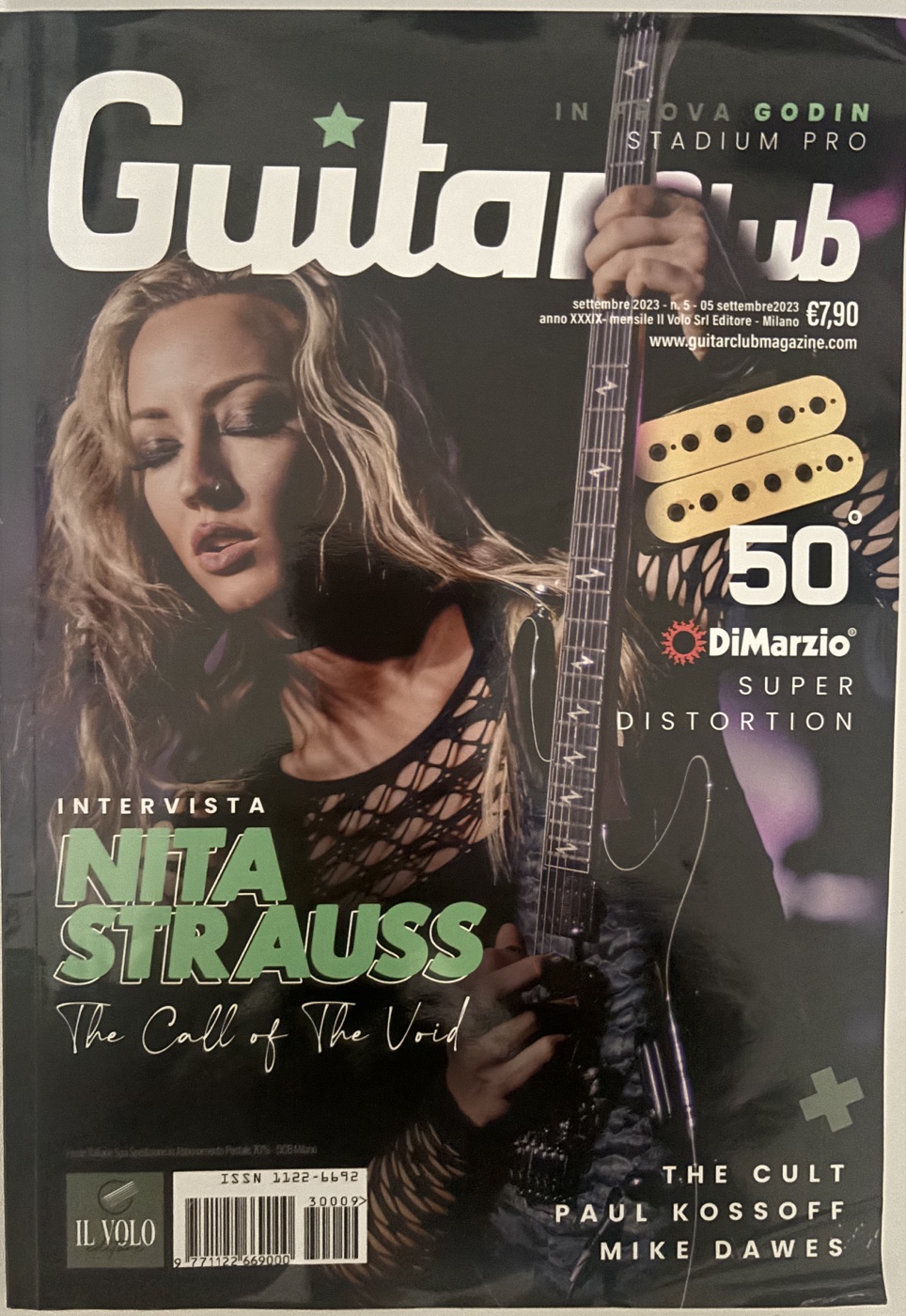
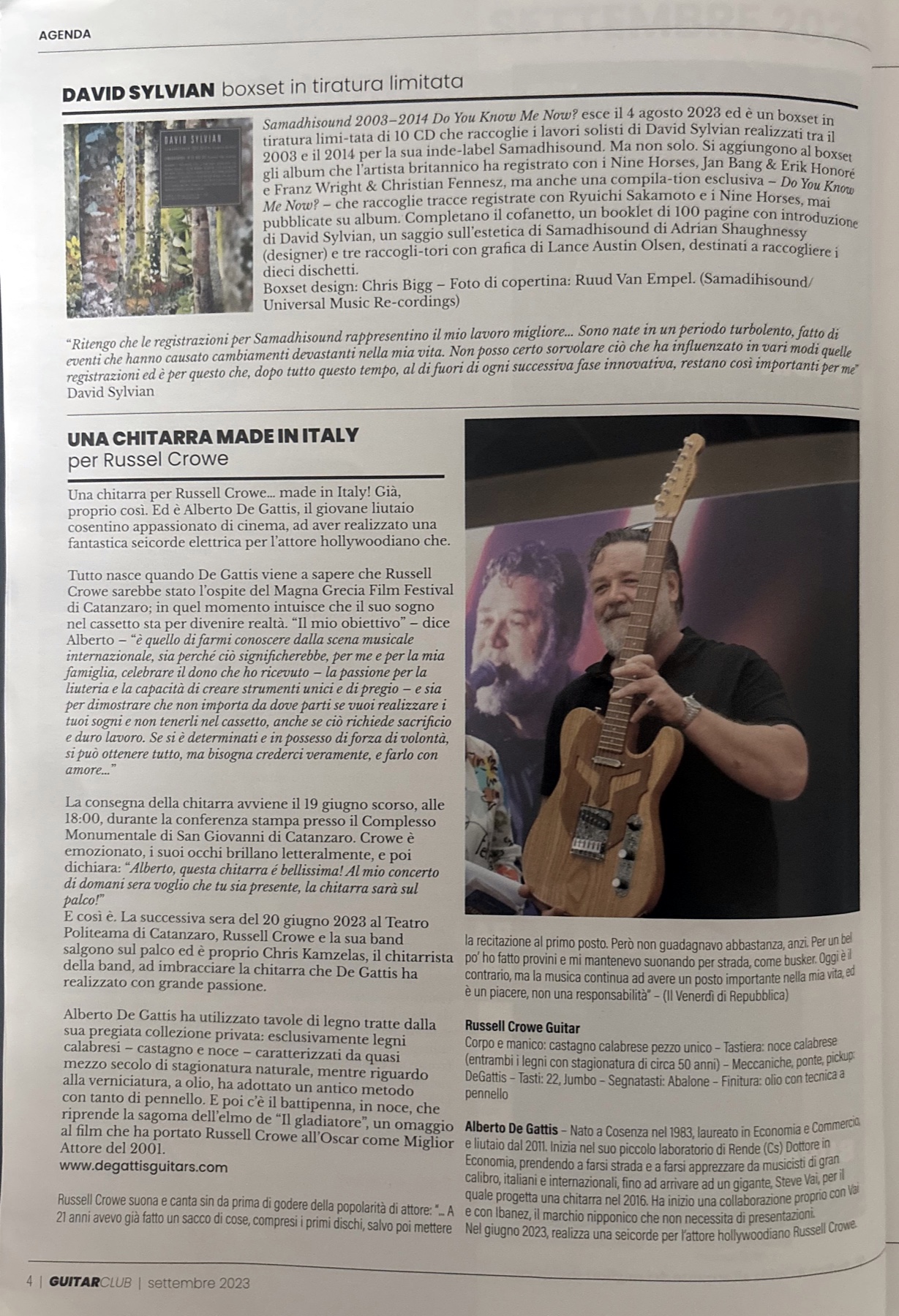
Guitar Club · issue 6 · September 2023
An Italian-made guitar for Russell Crowe
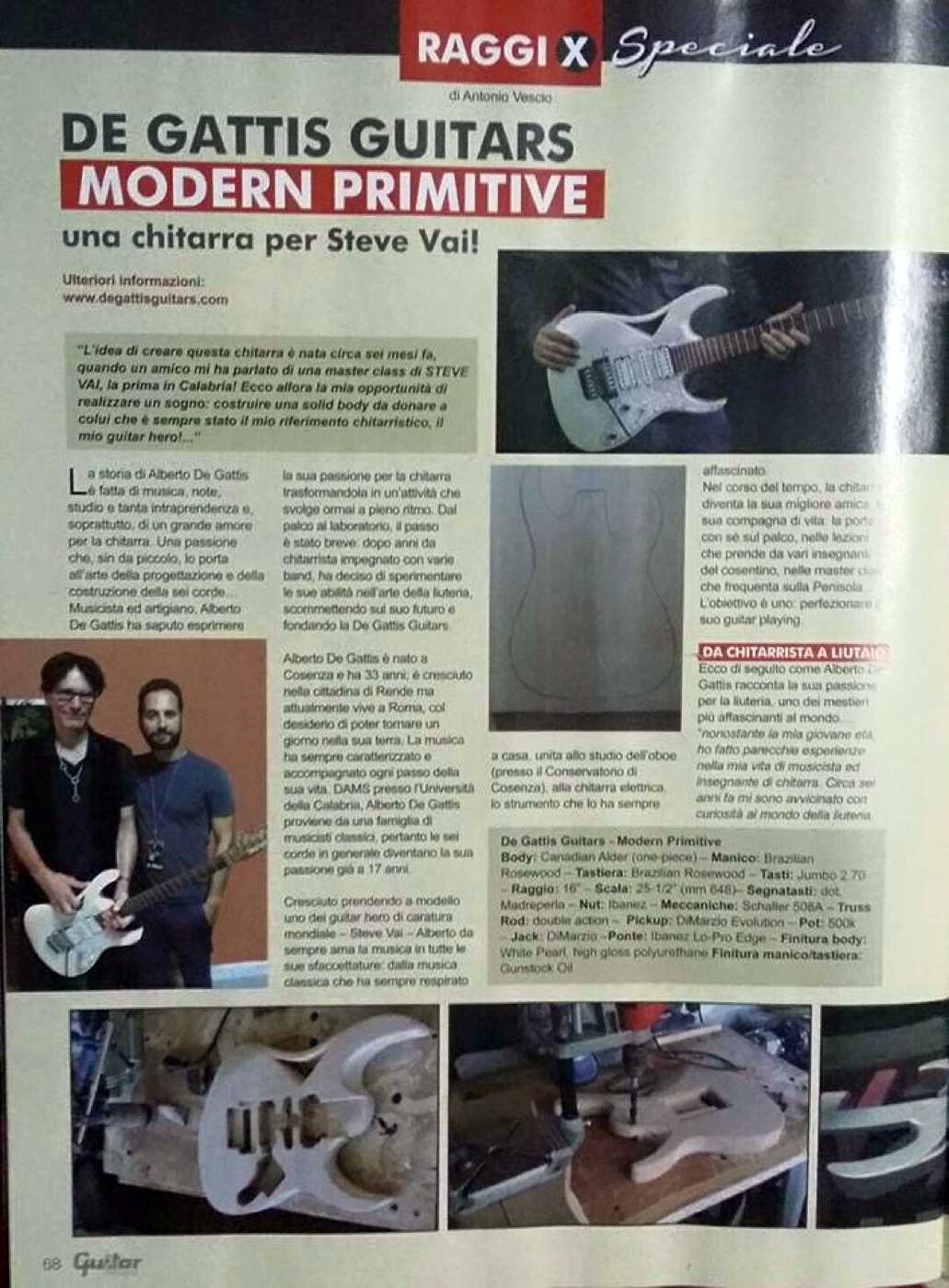
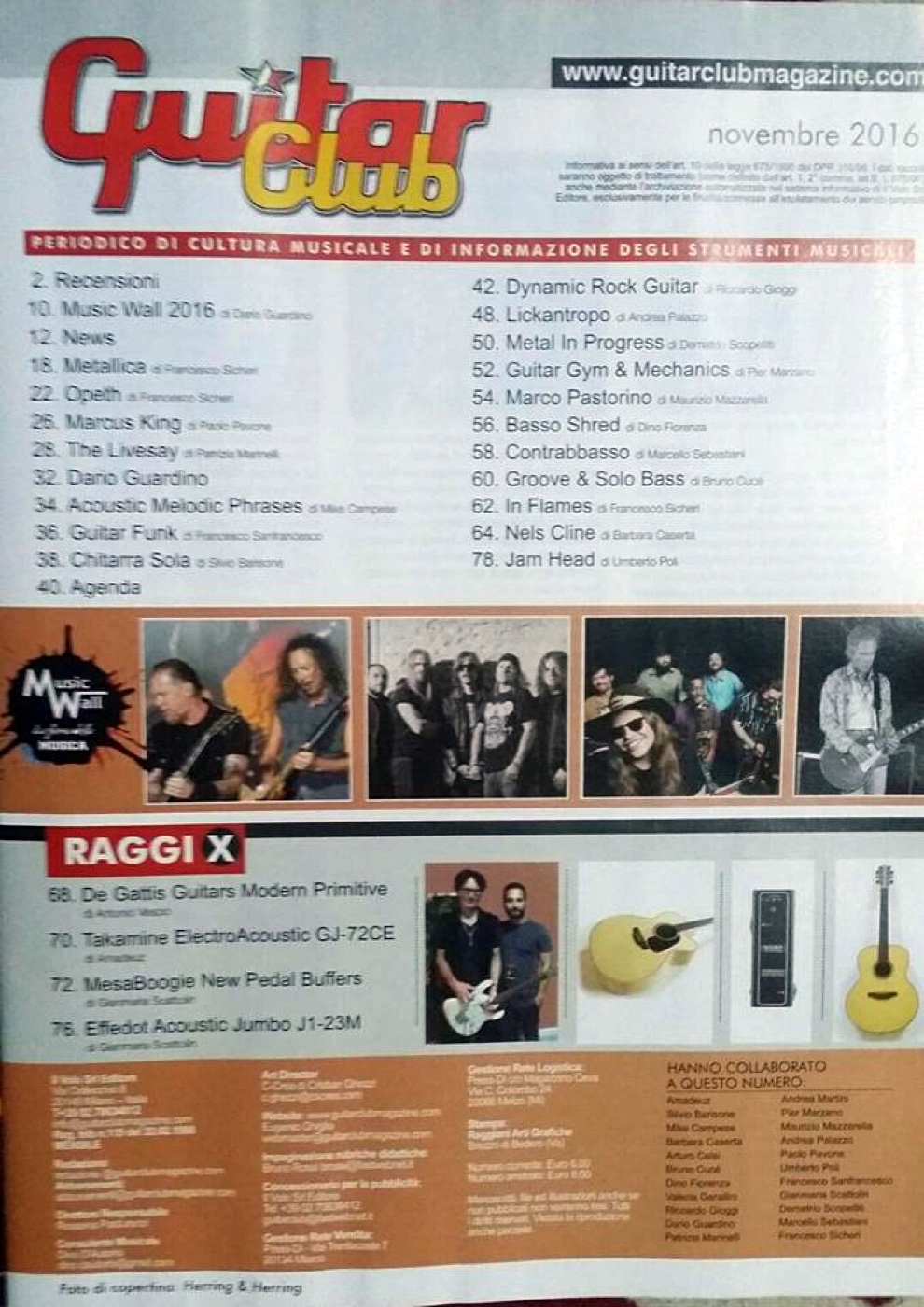
Guitar Club · issue 11 · November 2016
De Gattis Modern Primitive: a guitar for Steve Vai
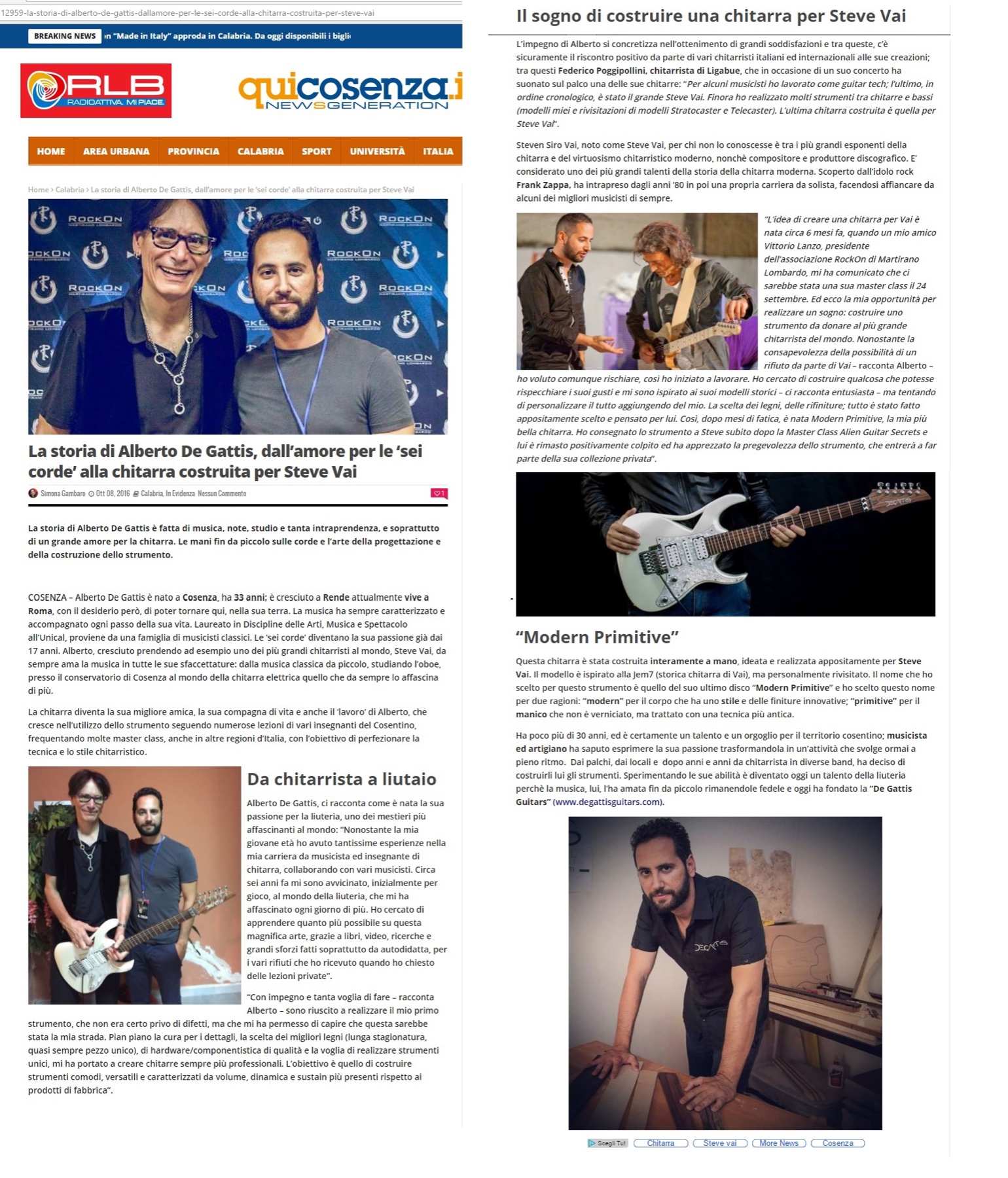
Quicosenza · 8 October 2016
The story of Alberto De Gattis: from a love of the six strings to the guitar built for Steve Vai
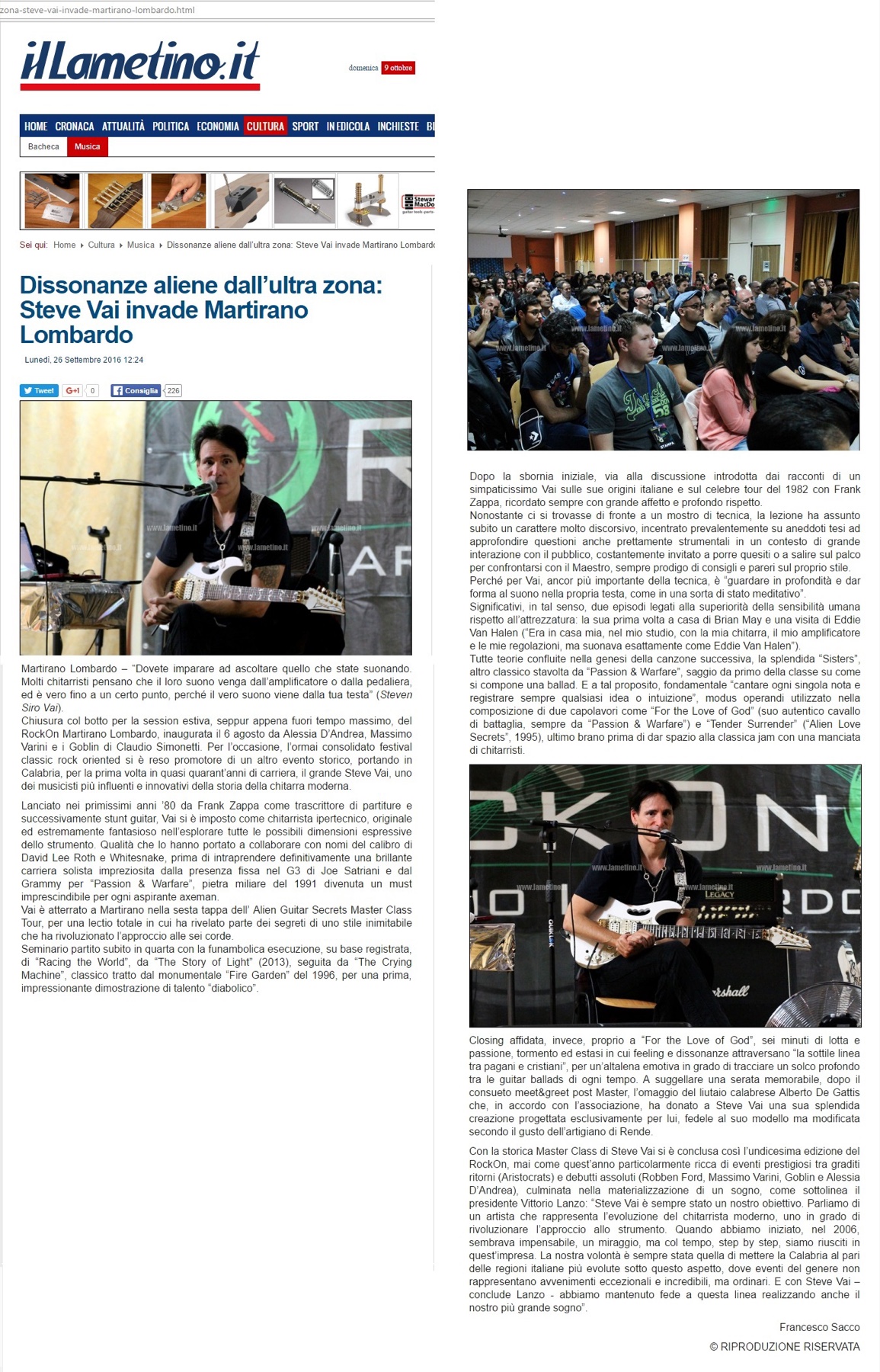
il Lametino · 26 September 2016
Alien dissonance from the ultra zone: Steve Vai lands in Martirano Lombardo